03 Mental Model
PROBLEM
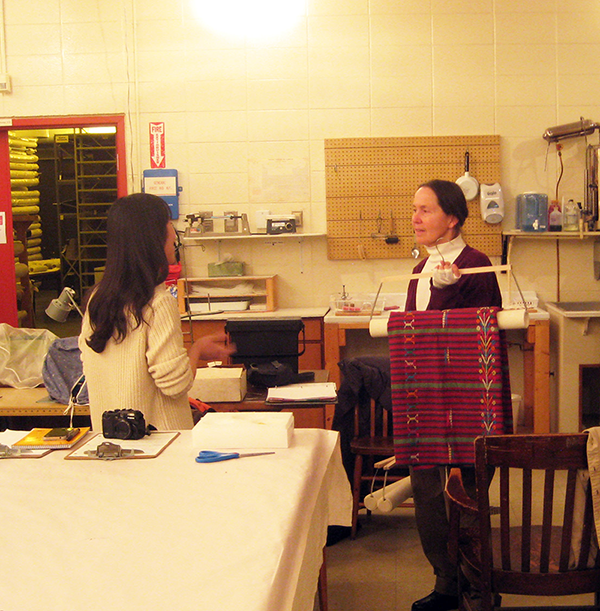
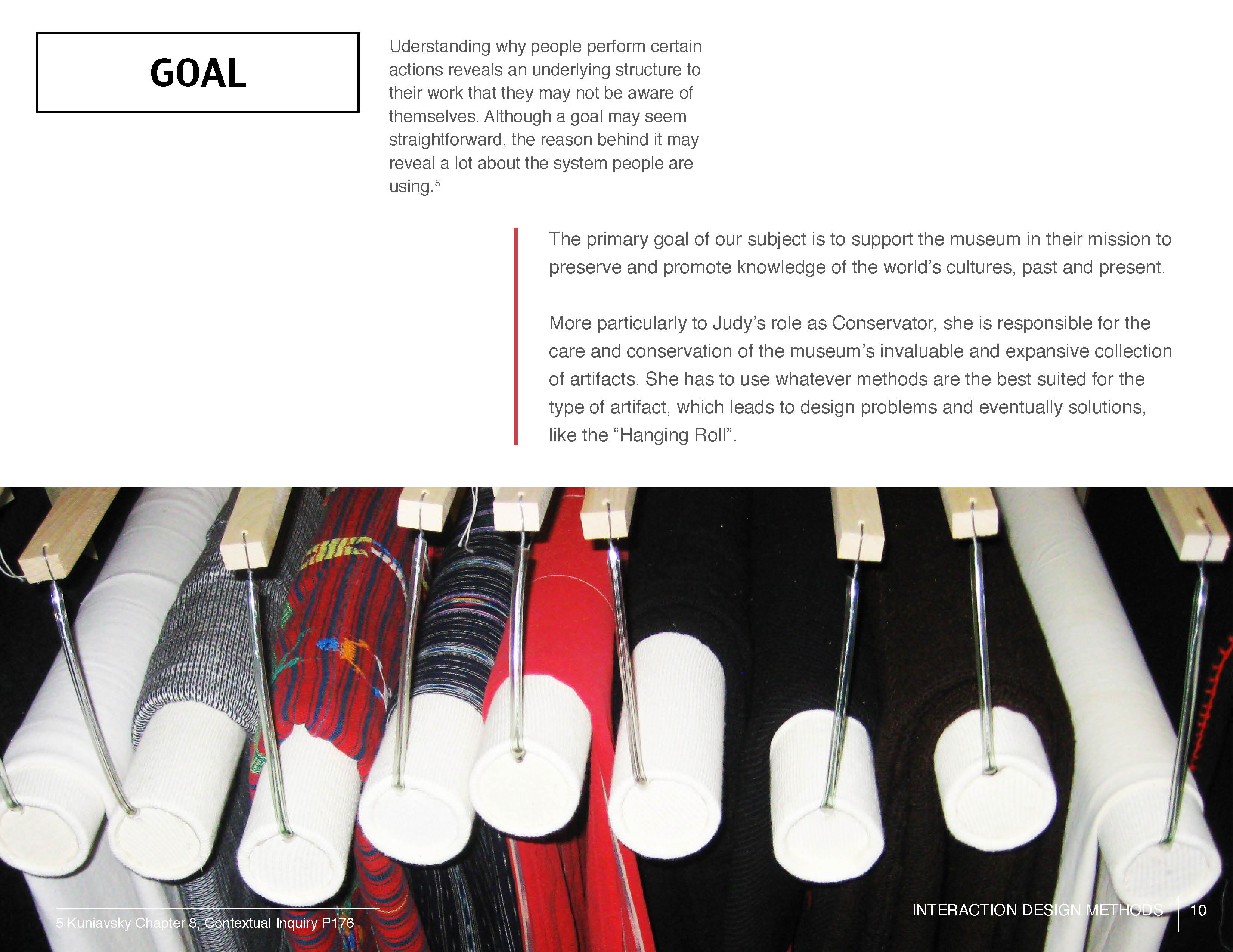
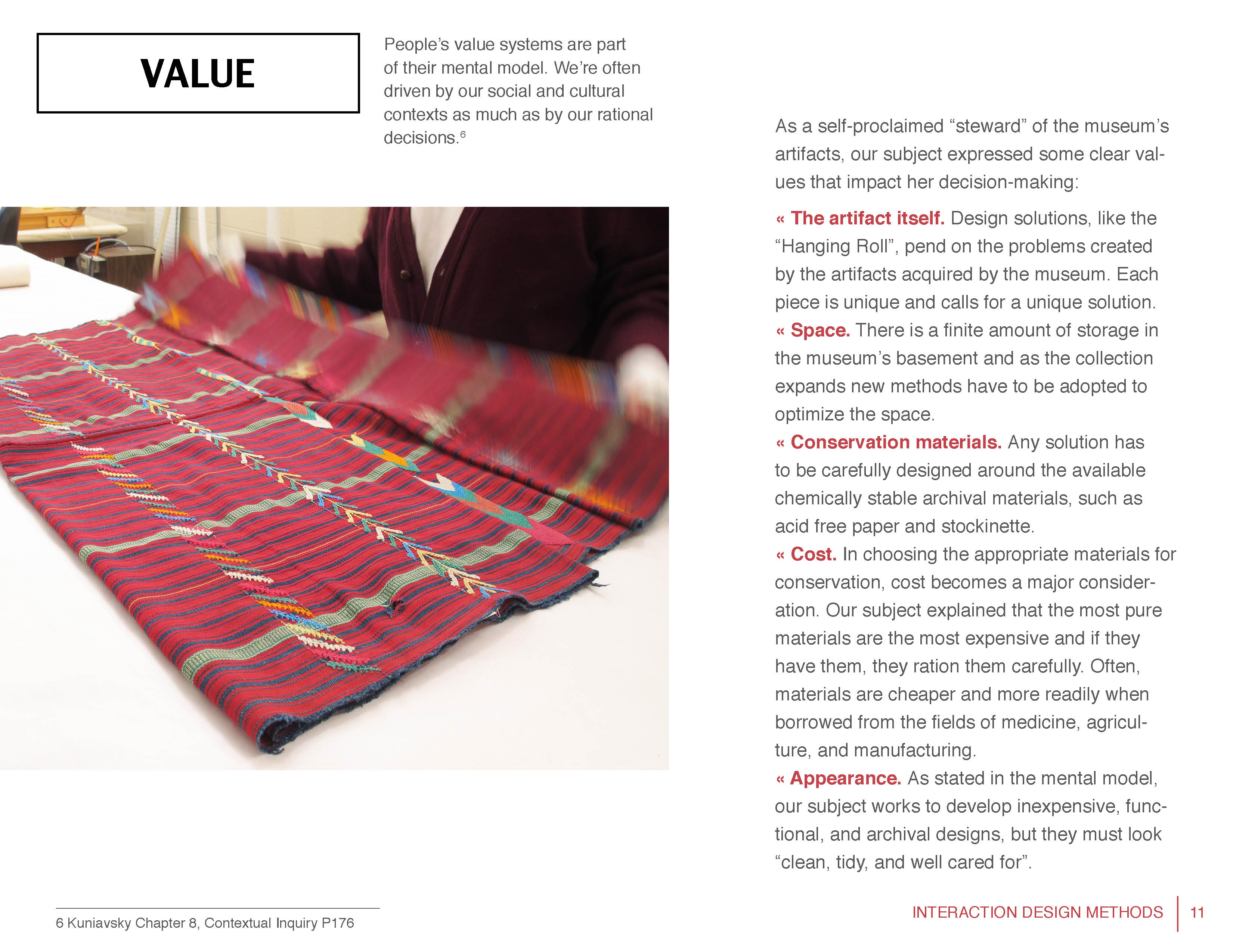
The museum collects and stores many types of textiles, of varying ages from varying locations. Judy designed the “Hanging Roll” about seven years ago for the storage of irregular textiles that are “in between an article of clothing and a flat textile”. She found when a textile is of an irregular form, traditional storage methods do not suit (i.e. folded into boxes, hung on padded hangers, rolled up flat textile).
EVOLUTION & INSPIRATION
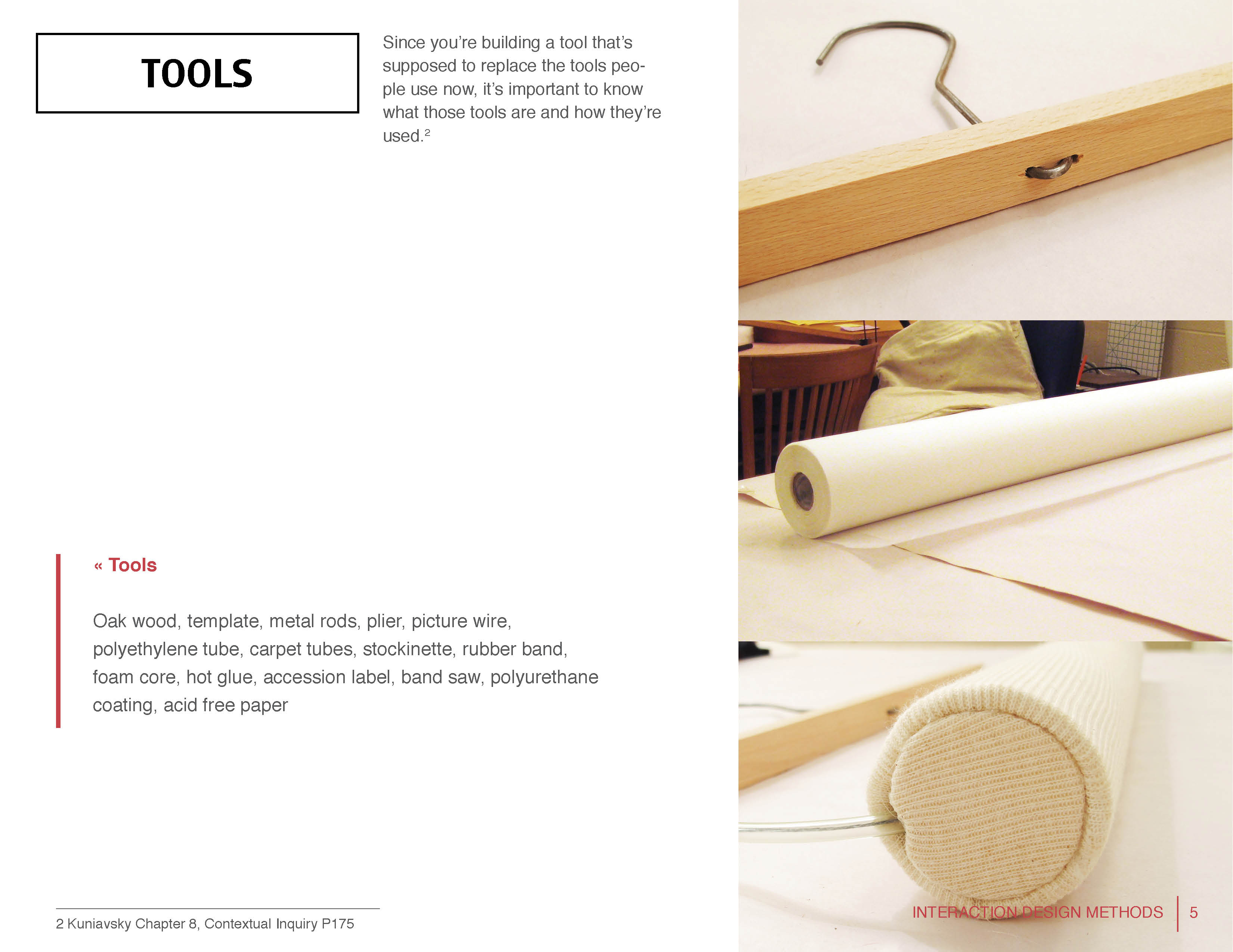
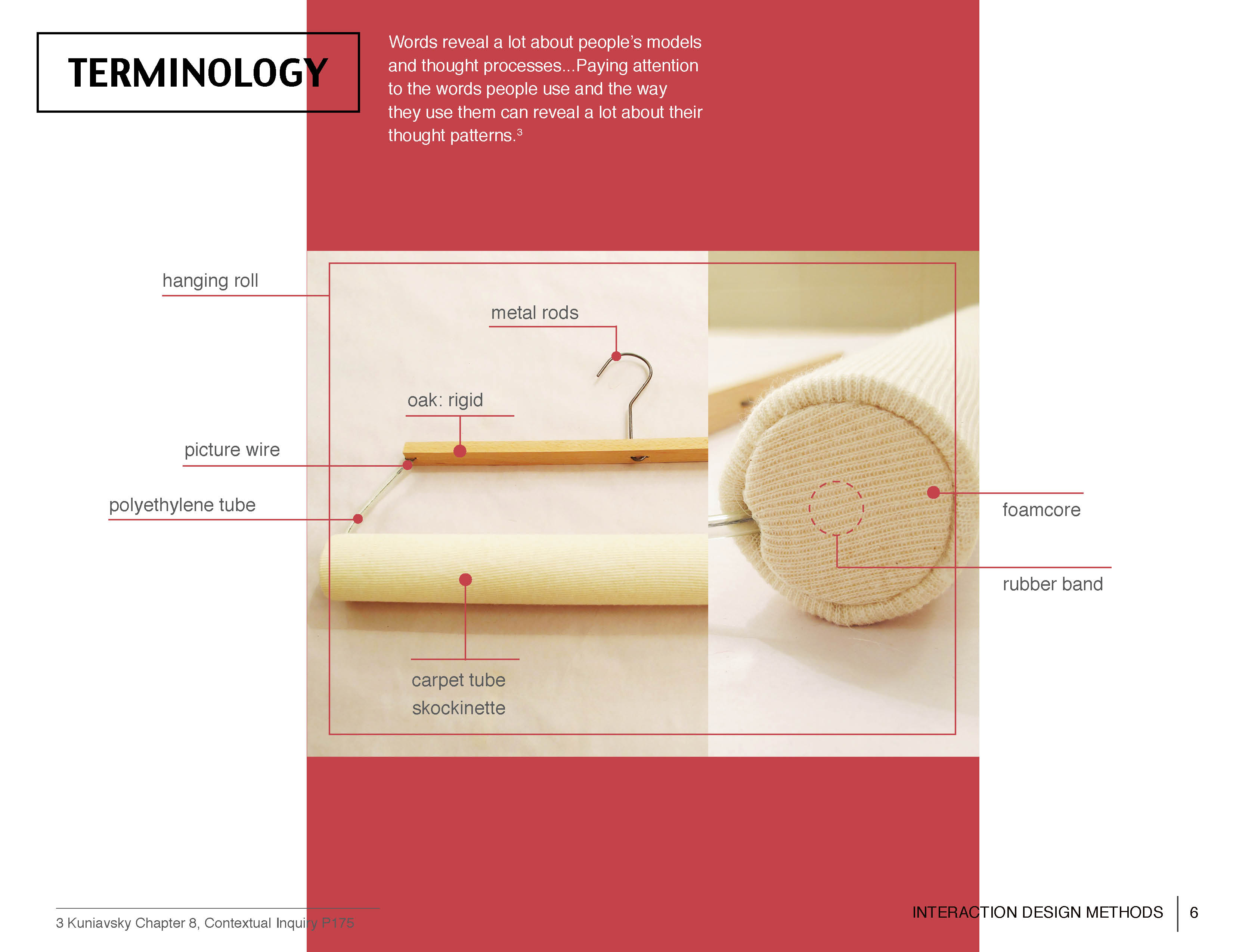
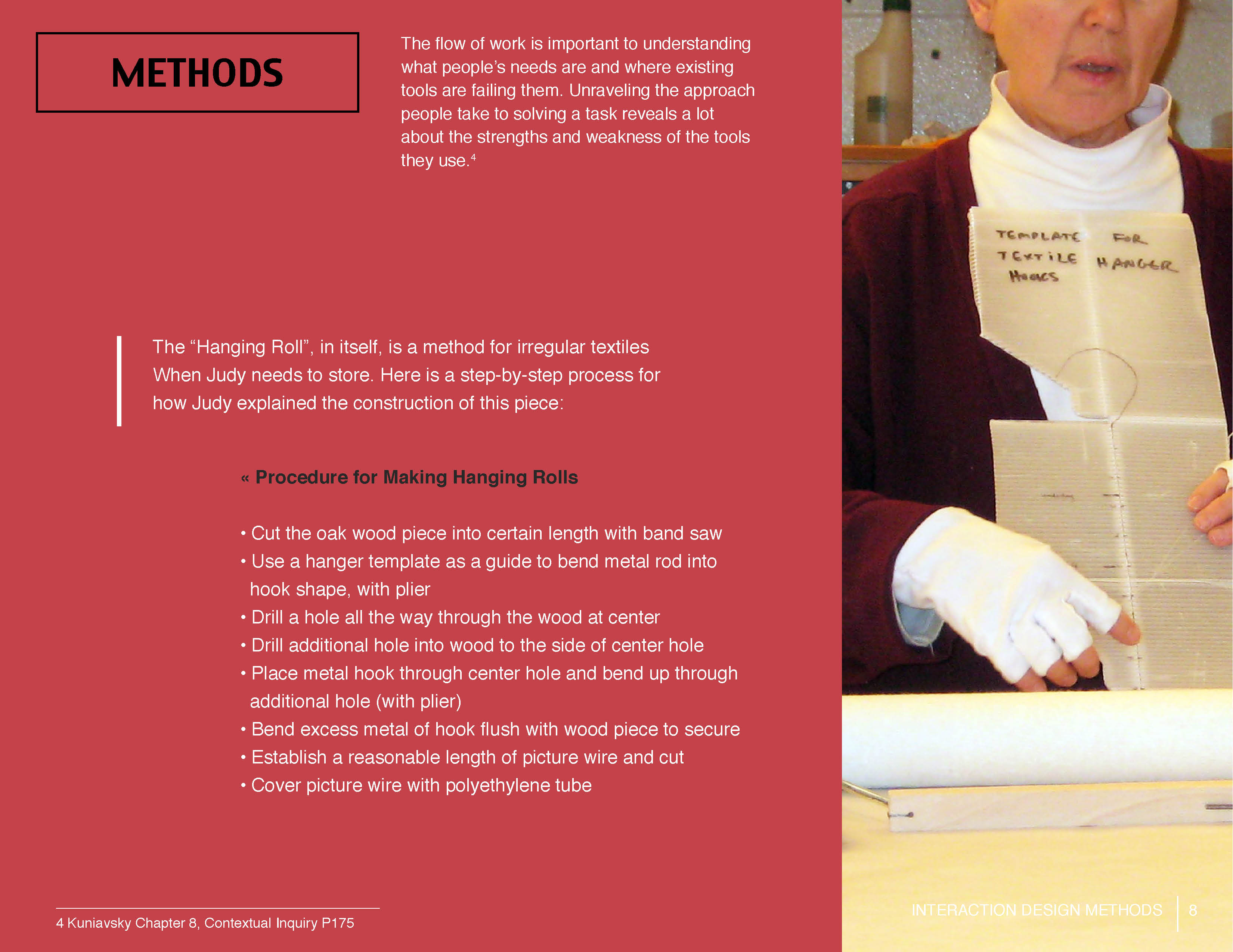
The first evolution was simply a regular hanger with a padded roll, but there was not a lot of space between the top of the hanger and the roll. Our subject got the idea for the “Hanging Roll” from The Reuse Store. She saw a hanger with a long wire neck on a flat wooden rod. The way it finally evolved was she when she found, again at the reuse center, a whole bunch of metal rods. She realized they could make custom hooks from the metal rods (around a template) and then use picture wire to give a good amount of space for bulky textiles to hang.
MATERIAL REASONING
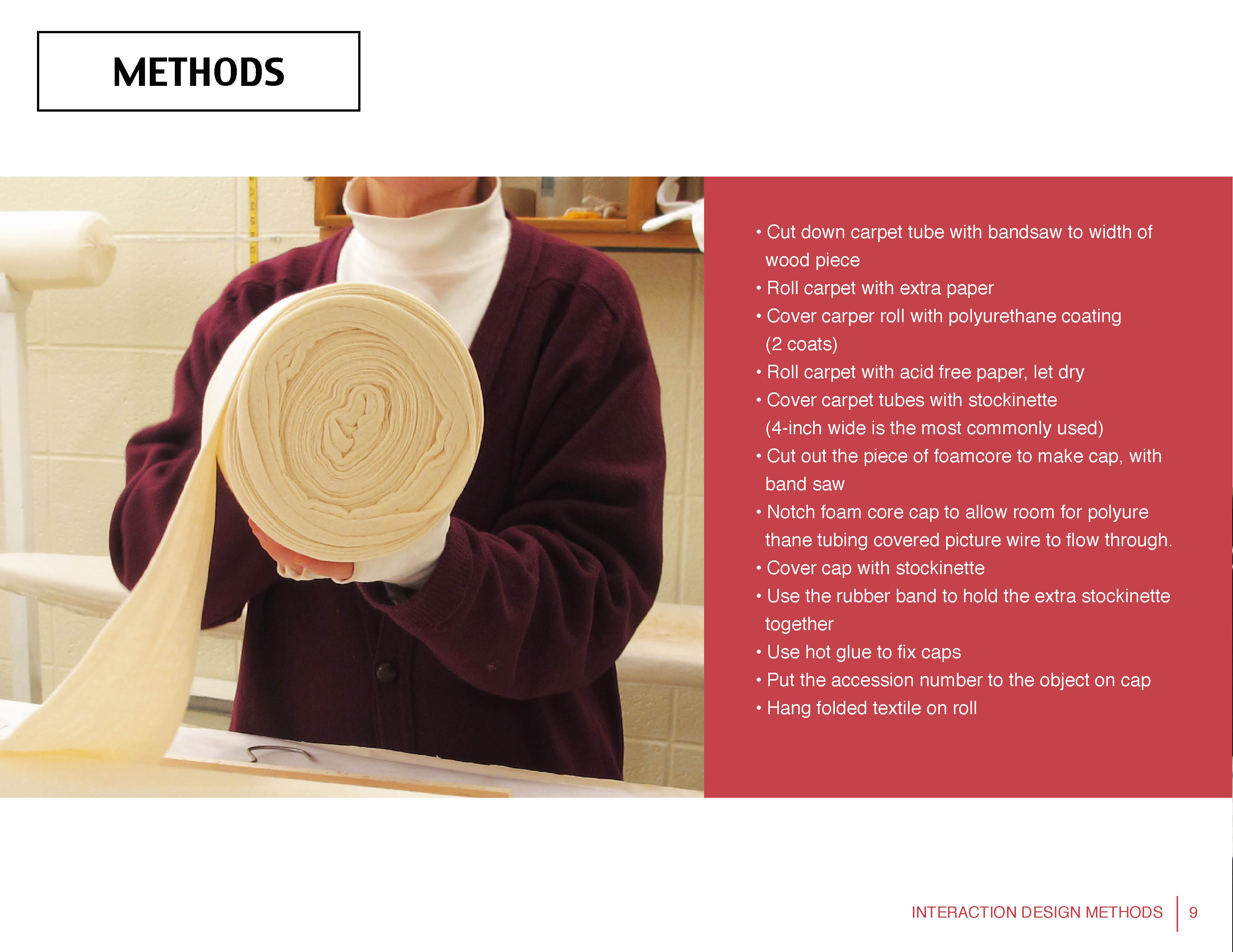
Not only will the “Hanging Roll” properly support the object, the materials she has fabricated the roll out of all serve a purpose. She explains that the materials she has used to cover the “Hanging Roll” are archival substances. These archival substances, she explains, are borrowed “traditionally from agriculture and manufacturing”. She notes that the field of conservation does produces some very pure, specialty substances for museums, but this becomes very expensive.